Table of contents
- How emplX Supports the Training Needs Analysis Process
- 1. Use emplX e-Performance Evaluation to Understand Performance Gaps
- 2. Use emplX e-Analytics to Make TNA More Evidence-Based
- 3. Use emplX e-Training/LMS to Conduct Training Needs Analysis
- Step-By-Step on How the TNA Process Can Work with emplX
- Why an Integrated HRMS Can Strengthen the TNA Process
- Conclusion
- 👉 Contact Us Now!
When employee performance falls below expectations, training can easily become the first solution that comes to mind. A manager notices a performance issue, assumes that employees need additional knowledge or skills, and begins looking for a suitable course. The problem is that the performance issue may not actually be caused by a lack of training.
This is one of the most important principles behind Training Needs Analysis (TNA). TNA is a systematic process used to identify the gap between current and desired employee performance and determine whether training is the right solution. Instead of making training decisions based on assumptions, businesses should diagnose the actual performance gap first and then decide what action is appropriate.
For Malaysian businesses using an HRMS, the employee and performance information already captured within the system can support this evidence-based approach. With emplX, particularly its e-Performance Evaluation, e-Analytics and e-Training/LMS modules, HR teams can use performance and workforce data to better understand development needs, analyse relevant patterns, and manage training once genuine needs have been identified.
The important distinction is that an HRMS does not replace HR judgement in TNA. Instead, the right HRMS can provide the data, performance records, analysis and training-management capabilities that help HR teams make better-informed decisions.
How emplX Supports the Training Needs Analysis Process
The relationship between TNA and emplX can be understood through three key areas:
|
TNA Requirement |
Relevant emplX Module |
How It Can Support TNA |
|
Understand employee performance and potential skill gaps |
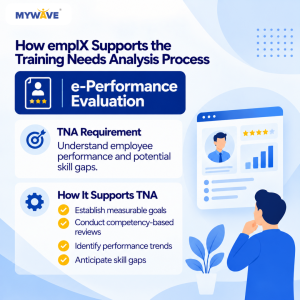
e-Performance Evaluation |
Establish measurable goals, conduct competency-based reviews, identify performance trends and anticipate skill gaps |
|
Make TNA more evidence-based |
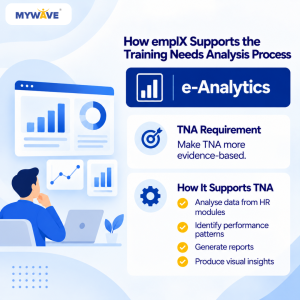
e-Analytics |
Analyse data from HR modules, including performance management, identify patterns, generate reports and provide visual insights |
|
Conduct TNA and turn identified needs into training activities |
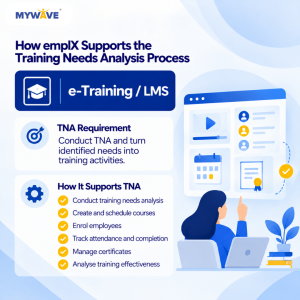
e-Training/LMS |
Conduct training needs analysis, create and schedule courses, enroll employees, track attendance and completion, manage certificates, and analyse training effectiveness |
Together, these capabilities can support different parts of the TNA journey, from understanding a performance gap to delivering and reviewing training. However, the process should still begin with the principle taught in TNA: diagnose the gap first, then decide the fix.
1. Use emplX e-Performance Evaluation to Understand Performance Gaps
A fundamental concept in Training Needs Analysis is the performance gap:
Performance Gap = Desired Performance − Current Performance
Before deciding that employees need training, the organisation needs to understand where current performance differs from the expected level. This is where emplX e-Performance Evaluation has a particularly strong relationship with TNA.
emplX allows managers and employees to establish clear, measurable, and time-bound goals that align with organisational KPIs. The system also supports competency-based reviews and maintains a digital record of evaluations and feedback. Importantly for TNA, emplX states that its performance evaluation capabilities can provide insights into employee performance trends, identify development opportunities, and help organisations anticipate skill gaps and future talent requirements.
This gives HR teams useful evidence when investigating a possible training need.
For example, rather than simply concluding that a team “needs more training”, HR can examine employee performance against established objectives and competency requirements. Where a gap appears, the organisation has a clearer starting point for investigating what is preventing the expected performance from being achieved.
This closely reflects the TNA principle of using evidence rather than assumptions.
However, a performance gap still should not automatically be classified as a training need. The TNA framework distinguishes between a genuine “Can’t Do” situation, where an employee lacks the necessary skill or knowledge, and a “Won’t Do” situation, where motivation or a process issue is responsible. Only the former represents a training need.
Performance evaluation data can help HR understand where gaps exist, but HR and management still need to diagnose why those gaps exist before deciding on training.
2. Use emplX e-Analytics to Make TNA More Evidence-Based
One of the central principles of TNA is that the analysis should be evidence-based, not assumption-based. This becomes particularly important when HR is trying to understand whether a performance problem is isolated to an employee, recurring across a particular group, or connected to a broader organisational issue.
emplX e-Analytics provides HR teams with tools to explore workforce data, drill down into information through pivot tables, and identify patterns across different data points. It can also consolidate data from different HR modules, including performance management, and generate charts and reports that make workforce trends easier to examine.
This capability is relevant to TNA because analysing a performance problem often requires more than looking at one employee or one evaluation in isolation. HR may need to examine patterns across teams, roles, locations or other workforce dimensions before concluding what is happening.
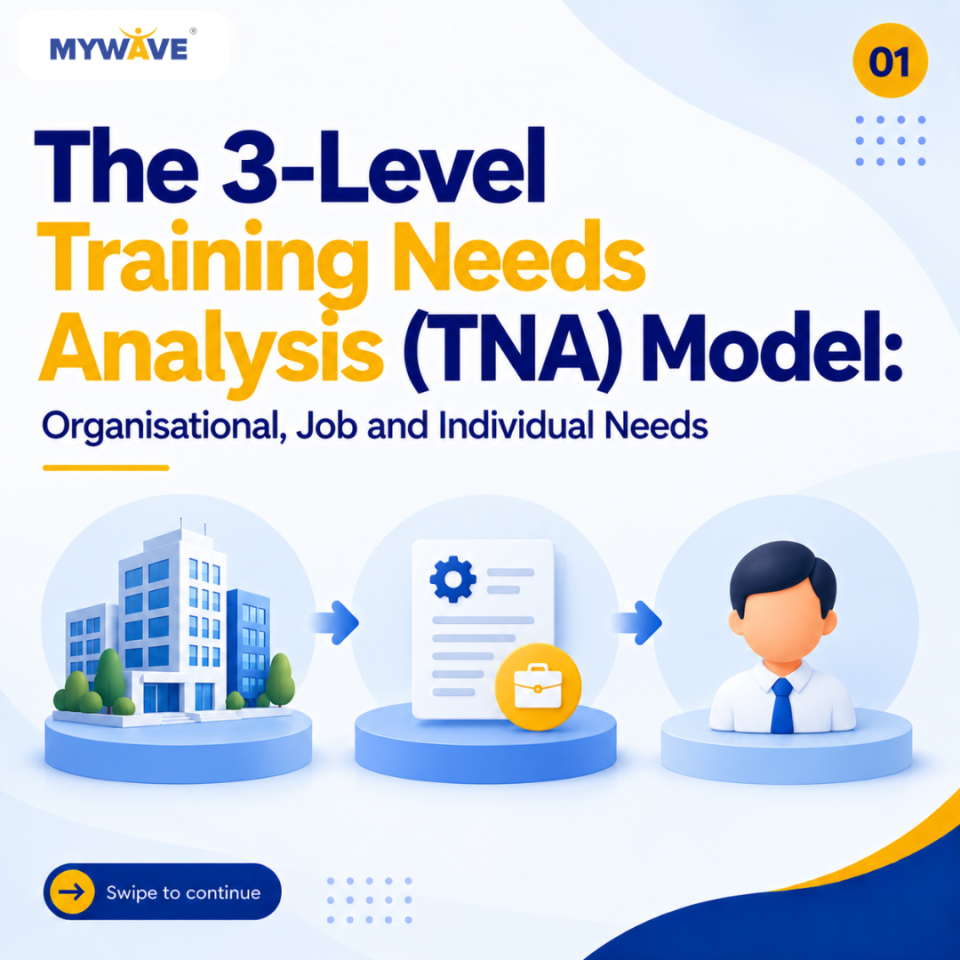
The TNA framework itself considers needs at three levels: Organisational, Job / Task and Individual. At the organisational level, businesses examine areas such as KPIs and underperformance. At the individual level, they look more closely at employee performance and possible skill gaps. Analytics can support this investigation by making relevant HR information easier to explore and compare.
The role of e-Analytics should therefore be understood as supporting the evidence-gathering and analysis process, rather than automatically deciding what employees should be trained on. The final diagnosis still depends on HR understanding the performance gap and determining its underlying cause.
3. Use emplX e-Training/LMS to Conduct Training Needs Analysis
Of all the emplX modules, emplX e-Training/LMS directly supports Malaysian businesses the most in carrying out TNA with its Reports and Analytics capabilities. This module provides analytical charts and reports that can be used to track progress and measure training effectiveness, making it particularly relevant for Malaysian HR teams that want to manage TNA and employee development within a broader HRMS environment.
The connection becomes even stronger after a genuine training need has been confirmed because identifying the need is only part of the TNA process. The organisation then needs to turn its findings into an actionable training plan.
From an Identified Training Need to an Actual Training Plan
A practical TNA should eventually answer several questions about the training being recommended:
What needs to be learned?
Who needs the training?
Why is the training required?
How should it be delivered?
When should it happen?
How will success be measured?
This is where e-Training/LMS can help HR move from analysis into training management. Within emplX, HR can create and manage courses, establish training schedules, assign trainers, and enrol employees. Automated reminders can be sent for upcoming courses, while employee attendance and learning completion can be tracked within the system.
The module also supports certificate management, allowing certificates to be attached and re-certification notifications to be issued. For organisations delivering training digitally, emplX provides e-learning functionality where employees can take self-paced courses and complete assessments. This creates an important connection between TNA and training execution.
Instead of TNA ending with a document stating that certain employees require development, an organisation can take the confirmed training need and manage the subsequent learning activities through the same HR ecosystem.
Use Training Data to Review Progress and Effectiveness
TNA should not be treated as a one-time exercise. The framework describes it as an ongoing, business-linked process, which means organisations should continue reviewing whether identified training needs and subsequent actions are producing the expected results.
The reporting and analytics capabilities within e-Training/LMS are relevant here as well. emplX can generate detailed training reports and analytics, use analytical charts to track progress, and measure training effectiveness. This creates a more complete cycle:
Identify the performance gap → Gather and analyse evidence → Determine whether training is required → Plan and deliver training → Review progress and effectiveness
Performance information can then continue to be examined through e-Performance Evaluation, while e-Analytics provides broader reporting capabilities for analysing workforce data and performance-management information.
For HR teams, this means TNA does not have to exist as an isolated exercise disconnected from the organisation’s wider HR information.
Step-By-Step on How the TNA Process Can Work with emplX
Bringing the TNA methodology and relevant emplX capabilities together creates a practical workflow for HR teams.
Step 1: Define the Performance Gap
Start by establishing the difference between current and desired performance. e-Performance Evaluation can support this by providing measurable employee goals, competency-based reviews, performance criteria, and evaluation records. The purpose at this stage is not to decide on training. It is to establish where performance is falling short.
Step 2: Determine Where the Need Exists
Consider whether the issue exists at an Organisational, Job / Task, or Individual level. Performance information can provide useful evidence, while e-Analytics can help HR explore data, drill into details, and identify patterns across relevant workforce information. This helps move the discussion from a general statement such as “employees need training” towards a more specific understanding of where the performance issue exists.
Step 3: Gather and Review the Evidence
TNA should use evidence rather than assumptions. Relevant performance information can be reviewed through e-Performance Evaluation, while e-Analytics can support broader exploration and reporting of HR data. These system records can form part of the evidence used during TNA, alongside human-led methods such as interviews, focus groups and observation where appropriate.
Step 4: Determine Whether It Is Really a Training Need
HR and management should then determine whether the identified gap represents a genuine lack of skill or knowledge. This decision should not be delegated entirely to the HRMS. The system can provide information that supports the investigation, but distinguishing between a “Can’t Do” and “Won’t Do” situation still requires analysis of the underlying performance problem.
Only genuine skill or knowledge gaps should move into the training plan.
Step 5: Plan, Deliver and Review the Training
Once the organisation has confirmed a genuine training need, e-Training/LMS can support the next stage by conducting training needs analysis and helping HR manage courses, schedules, trainers, employee enrolment, attendance, learning completion, certificates, assessments, reports and analytics. The result is a more connected process between identifying a genuine development need and managing the training response.
Why an Integrated HRMS Can Strengthen the TNA Process
One of the challenges with TNA is that the information needed to understand employee development requirements can sit across different parts of HR. Performance information may be captured during evaluations. Broader workforce patterns may need to be investigated through reporting. Training activities and completion records then need to be managed separately.
emplX brings these functions into an integrated cloud HR and payroll platform. Its Human Capital Management offering includes e-Training/LMS, e-Performance Evaluation and e-Analytics within the wider emplX ecosystem.
For businesses conducting TNA, the value is not simply having more HR data. The greater value comes from being able to use relevant information more systematically: understand performance, analyse the evidence, identify genuine development needs, manage the resulting training and continue reviewing performance.
That is much closer to the purpose of Training Needs Analysis than simply creating a yearly list of courses for employees to attend.
Conclusion
Training Needs Analysis works best when businesses begin with evidence rather than assumptions. A performance gap should first be identified and investigated before the organisation decides that training is required.
With emplX, Malaysian businesses can connect different parts of this process within one HRMS ecosystem. e-Performance Evaluation can provide clearer information about employee goals, competencies and performance. e-Analytics can help HR explore workforce information and identify patterns. Once a genuine training need has been established, e-Training/LMS can support training needs analysis and help manage the subsequent courses, enrolment, learning activities, completion records and reporting.
The result is not an automated replacement for good HR judgement. It is a stronger information and management foundation for applying that judgement.
For Malaysian businesses looking to move away from assumption-based employee development and towards a more systematic approach to performance and training, emplX Cloud HR & Payroll System provides an integrated platform for managing the HR information and human capital processes that can support a more evidence-based TNA approach.
👉 Contact Us Now!
Contact our team to inquire about emplX or schedule for a demo!
👉 For more information, reach out to us at: https://mywave.biz/contact-us/
📧 Or, through our email at: enquiry@mywave.biz