Managing employee tax matters does not end when an employee resigns, retires, leaves Malaysia, or completes their employment contract. Employers are also responsible for ensuring that the appropriate tax clearance procedures are completed with Lembaga Hasil Dalam Negeri Malaysia (LHDNM). Understanding the tax clearance process helps employers fulfil their obligations while ensuring employees can settle any outstanding income tax before receiving the remaining monies withheld by the employer.
This guide explains what a Tax Clearance Letter is, when it is required, how employers can apply, and several other related services available through the MyTax portal.
What Is a Tax Clearance Letter?
A Tax Clearance Letter is a certificate issued by Lembaga Hasil Dalam Negeri Malaysia (LHDNM) indicating whether an employee has any outstanding income tax. After the Tax Clearance Letter is issued, the employer will release the balance of any money withheld from the employee once any outstanding taxes, if applicable, have been settled according to the information stated in the certificate.
How to Apply for a Tax Clearance Letter
The employer is responsible for submitting the appropriate application form based on the employee’s circumstances.
-
Form CP21
- Employers should submit Form CP21 under Section 83(4) if the employee is about to leave or intends to leave Malaysia.
-
Form CP22A
- Employers should submit Form CP22A under Section 83(3) for retirement, resignation, or termination of employment involving employees working in the private sector.
-
Form CP22B
- Employers should submit Form CP22B under Section 83(3) for retirement, resignation, or termination of employment involving employees working in the public sector.
Submission Method
Applications can be submitted online through e-SPC, and submission can only be made by the employer. Where all required documents have been submitted, and no further clarification is required, LHDNM will process and issue the Tax Clearance Letter within fourteen (14) working days.
When Should Employers Apply for Tax Clearance?
Employers must notify LHDNM not less than 30 days before the expected date of the following events:
- The expiration of the employee’s work contract.
- The employee’s resignation or termination of employment.
- The employee’s departure from Malaysia for more than 3 months.
In the Event of Death
Where an employee has passed away, the Next-of-Kin must submit the application within 30 days after the date of death.
Penalties for Late Submission
Delaying or failing to submit a tax clearance application may result in penalties. The penalties include:
- A fine between RM200 and RM20,000.
- Imprisonment for up to six months.
Detailed guidelines are available from LHDNM’s published guidelines.
Amendment of Return Form: Reassessment of Tax Status (90 Calendar Days)
If an expatriate employee was initially taxed at the flat non-resident rate (30%) because they spent fewer than 182 days in Malaysia during their year of arrival, they may later qualify as a tax resident.
Under Section 7(1)(b) of the Income Tax Act 1967 (refer to Malaysia Tax Residency Explained: Rules, Residence Status & Tax Treatment Under the Income Tax Act 1967 for more information), if their short stay in the first year is linked to a period of residency of 182 consecutive days or more in the following year, their status for the first year can be retroactively revised to “Resident”.
How to Apply Online: Taxpayers may submit a request for reassessment electronically via the Customer Feedback Form (CFF) on the MyTax portal together with the required supporting documents. LHDN may request additional information or original documents where necessary to verify the taxpayer’s residency status.
LHDN’s target processing time for this application is 90 calendar days from the date a complete application and all required supporting documents are received. Where the reassessment results in an overpayment of tax, any refund will be processed in accordance with LHDN’s refund procedures.
Example of the 182-Day Link-Up Rule:
2024
- 1 September 2024 – 31 December 2024 (less than 182 days)
- Resident under Section 7(1)(b)
2025
- 1 January 2025 – 3 July 2025 (more than 182 days)
Required Documents
The following documents should be submitted through the Customer Feedback Form:
- Tax borne letter
- EA Form
- PCB II
- Receipt of tax relief
- Passport copy (all pages)
- List of entries into and exits from Malaysia
Certificate of Residence (10 Working Days)
Taxpayers may apply for a Certificate of Residence through the MyTax portal.
Application Steps
- Log in to MyTax.
- Navigate to e-Services.
- Select e-Residence.
- Complete the required information.
- Upload a copy of the passport (all pages).
*For enquiries, email cor@hasil.gov.my.
*Applicants should verify the applicability under the relevant Double Taxation Agreement (DTA/DTAA).
*FAQs relating to e-Residence are also available through the MyTax portal.
Understanding the MyTax Taxation Cycle
The MyTax portal provides various digital services throughout a taxpayer’s compliance journey.
1. Registration and Profile Update
- e-Daftar
- e-Kemaskini
2. Filing and Review
- e-Filing
- e-WHT
- e-Residence
- BN Filing / BN Review submission for the past seven years
3. Payment
- ByrHASIL
- e-Lejar
- e-TT
4. Applications and Appeals
- Customer Feedback Form (CFF)
- e-SPC
- e-CP22
Before Travelling Overseas
Before travelling overseas, taxpayers should check their status through the MyTax portal.
The MyTax portal also allows users to check:
- Stoppage Order Status
- Refund status
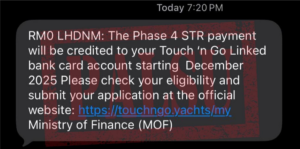
In addition, taxpayers are advised to remain vigilant against scammers by blocking suspicious numbers and avoiding responses to suspicious messages.
Conclusion
Tax clearance is an important part of an employer’s responsibilities whenever an employee resigns, retires, leaves Malaysia, or completes their employment. Understanding which form to use, meeting the required submission deadlines, and preparing the necessary documents can help ensure the process is completed efficiently and in accordance with LHDNM requirements.
For businesses managing employee movements, payroll, and statutory obligations, staying updated with tax compliance requirements is essential. MYWave supports organisations with comprehensive HR and payroll solutions designed to simplify administrative processes and help employers manage statutory responsibilities with greater confidence. Backed by extensive experience in HR and payroll management, MYWave helps businesses streamline workforce administration while keeping day-to-day payroll operations organised and efficient.
👉 Looking for reliable HR and payroll expertise?
Contact MYWave to discover how our solutions can support your business: https://mywave.biz/contact-us/